The Most Common Semi-Truck Breakdowns — and What to Do in the First 10 Minutes
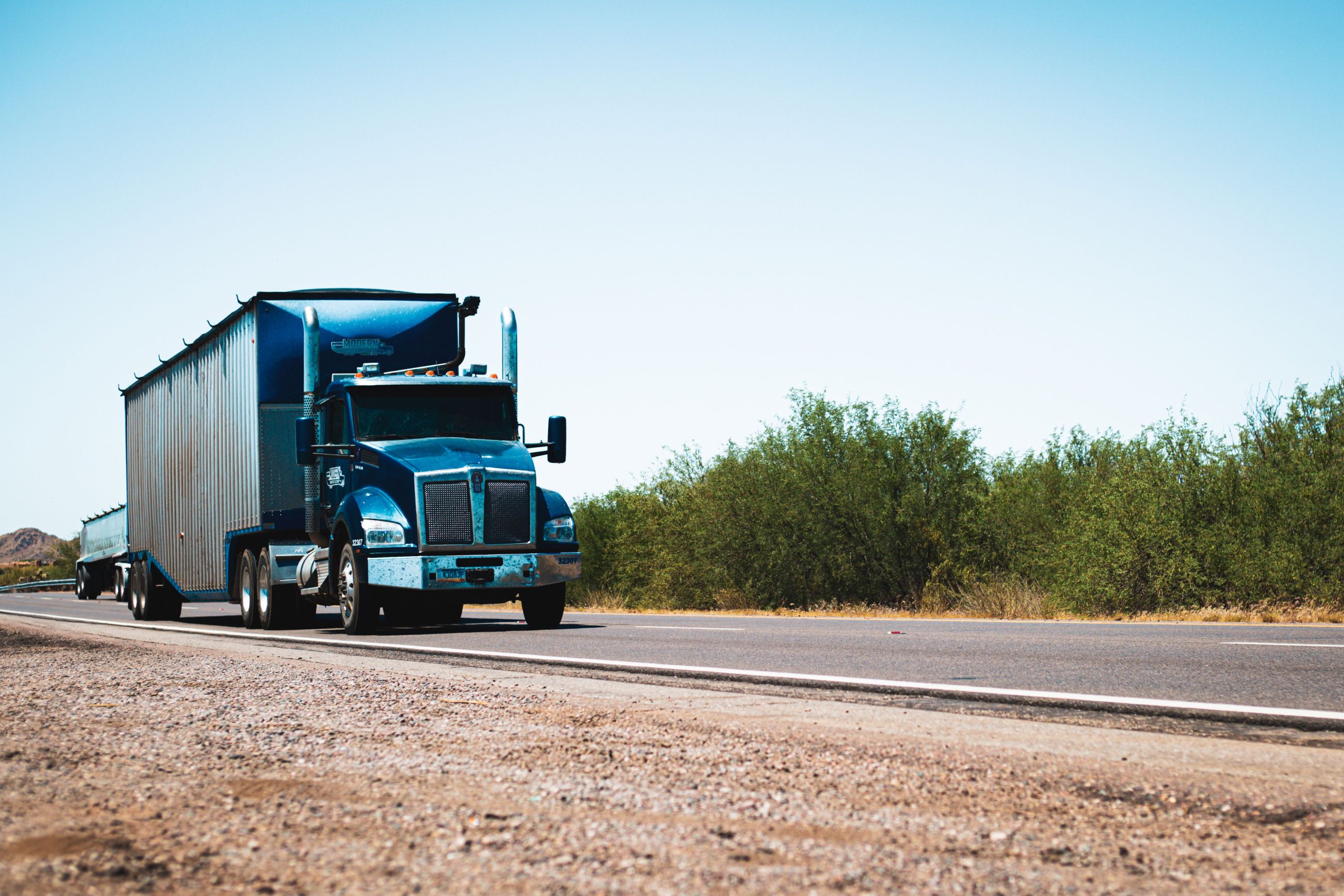
A semi-truck breaking down is rarely a mystery. Ask any roadside mechanic what actually gets called out, and the answer is boring and consistent: a tire that was losing air for a week, a brake that drifted out of adjustment, a lamp that quit and nobody noticed. The failures that strand 80,000-pound rigs are almost never exotic. They are wear items that ran past their warning signs, and they show up on the out-of-service list in the same order every single year.
That produces two hard lessons. The first is that most breakdowns are preventable with an inspection you are already legally required to do. The second is that once a truck is down, the mechanical problem is usually the least dangerous thing about the next ten minutes – the traffic is. This is a guide to both halves: what fails, and what to do about it when it does.
The first 10 minutes matter more than the fault code
Under federal rule 49 CFR 392.22, a driver stopped on the traveled portion or shoulder of a highway for anything other than a traffic stop has to place warning devices within 10 minutes. Not “when it feels safe,” not “after I look at the engine” – 10 minutes. The rule is specific about where: one device on the traffic side about 4 paces (roughly 10 feet) from the truck in the direction of approaching traffic, and two more about 40 paces (roughly 100 feet) ahead of and behind the truck, in the center of the lane or shoulder. Hazard flashers go on immediately and stay on until the triangles are set.
The reason the timing is strict is that a stopped truck is a target. Passenger-vehicle drivers are the ones who have to move over, and they mostly do – NHTSA notes that all 50 states have Move Over laws, and 19 states plus Washington, D.C., extend them to any vehicle with hazard lights flashing, including disabled trucks. But those laws are not a force field. Get out of the live lane, exit through the passenger door when you can, and stand behind the guardrail rather than between your truck and the traffic that is still doing 70.
What actually takes trucks off the road
The best data on why trucks get grounded at the roadside comes from the Commercial Vehicle Safety Alliance’s annual International Roadcheck. In the 2025 event, inspectors conducted 56,178 inspections and flagged 18.1 percent of vehicles out of service. The category ranking has held for years, and it reads like a pre-trip checklist in reverse:
| Rank | Violation category | Share of vehicle OOS violations | OOS violations cited (2025) |
|---|---|---|---|
| 1 | Brake systems | 24.4% | 3,304 |
| 2 | Tires | 21.4% | 2,899 |
| 3 | 20% defective brakes | 16.7% | 2,257 |
| 4 | Lighting devices | 12.8% | – |
| 5 | Cargo securement | 11.4% | – |
| 6 | Steering mechanism | 4.1% | – |
Source: CVSA 2025 International Roadcheck results, as reported by Fleet Maintenance, October 2025. Brake categories combined – including “20% defective brakes” – accounted for 41.1 percent of all vehicle out-of-service violations.
Notice what that table says: brakes and tires together drive more than 60 percent of grounded trucks. These are not random failures. They are the two systems a driver can see by walking around the rig, and they still top the list every year.
Tires: the single biggest cause, and the easiest to catch
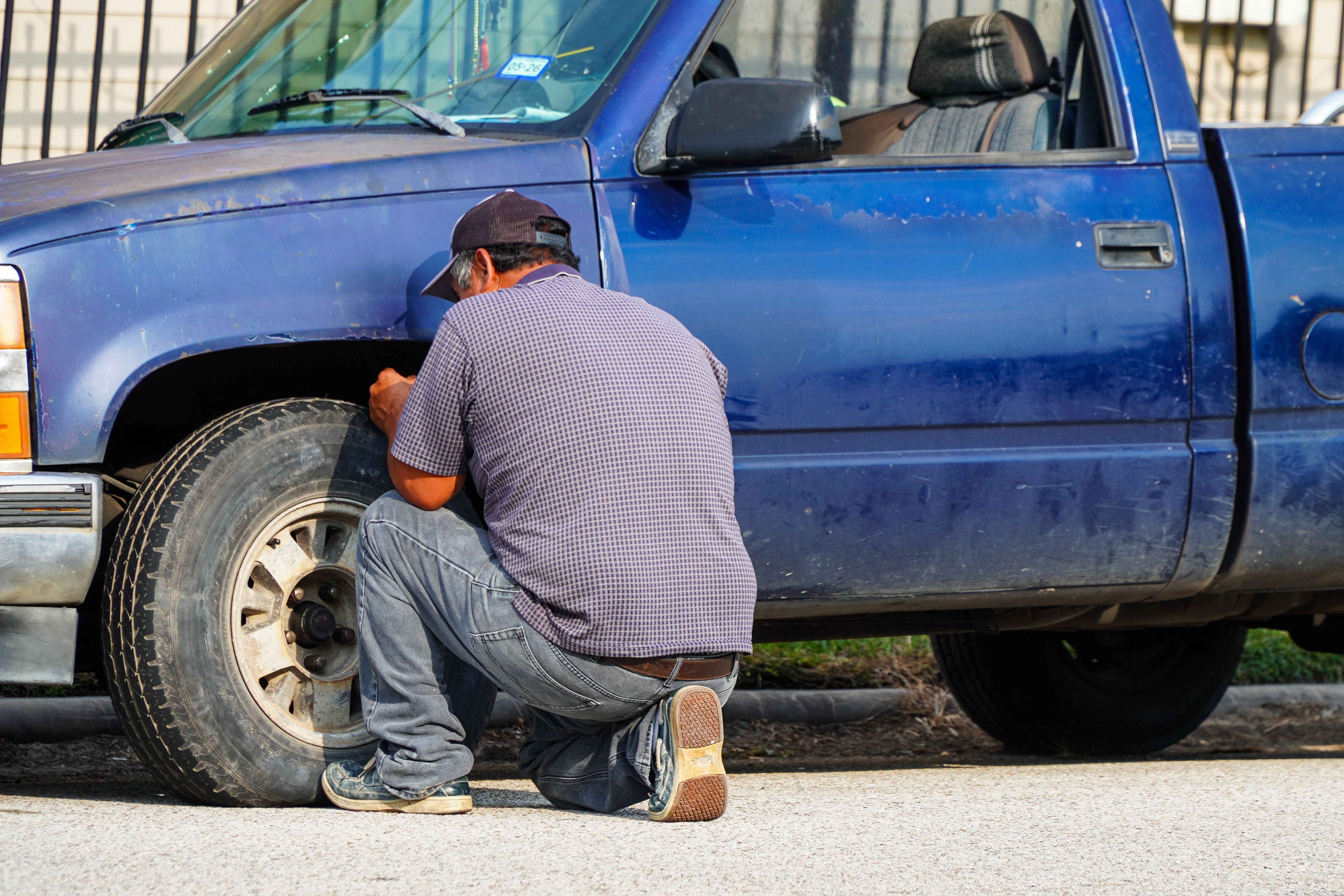
The Technology & Maintenance Council puts tires at 53.5 percent of all roadside breakdowns – more than every other system combined. The mechanics are simple enough: underinflation builds heat in the sidewall until it fails, and low tread invites a puncture that a good tire would have shrugged off. The saving grace is that tires fail slowly. Pressure drops over weeks and tread wears unevenly long before a blowout, which is why a five-minute pressure check on the walk-around is the highest-return habit a driver has.
What does a tire event cost? A basic roadside tire service call typically runs $500 to $600 before the replacement tire, which is another few hundred dollars – and that is before the freight delay. The repair was always the cheap part.
Brakes: the costliest failure, in every sense
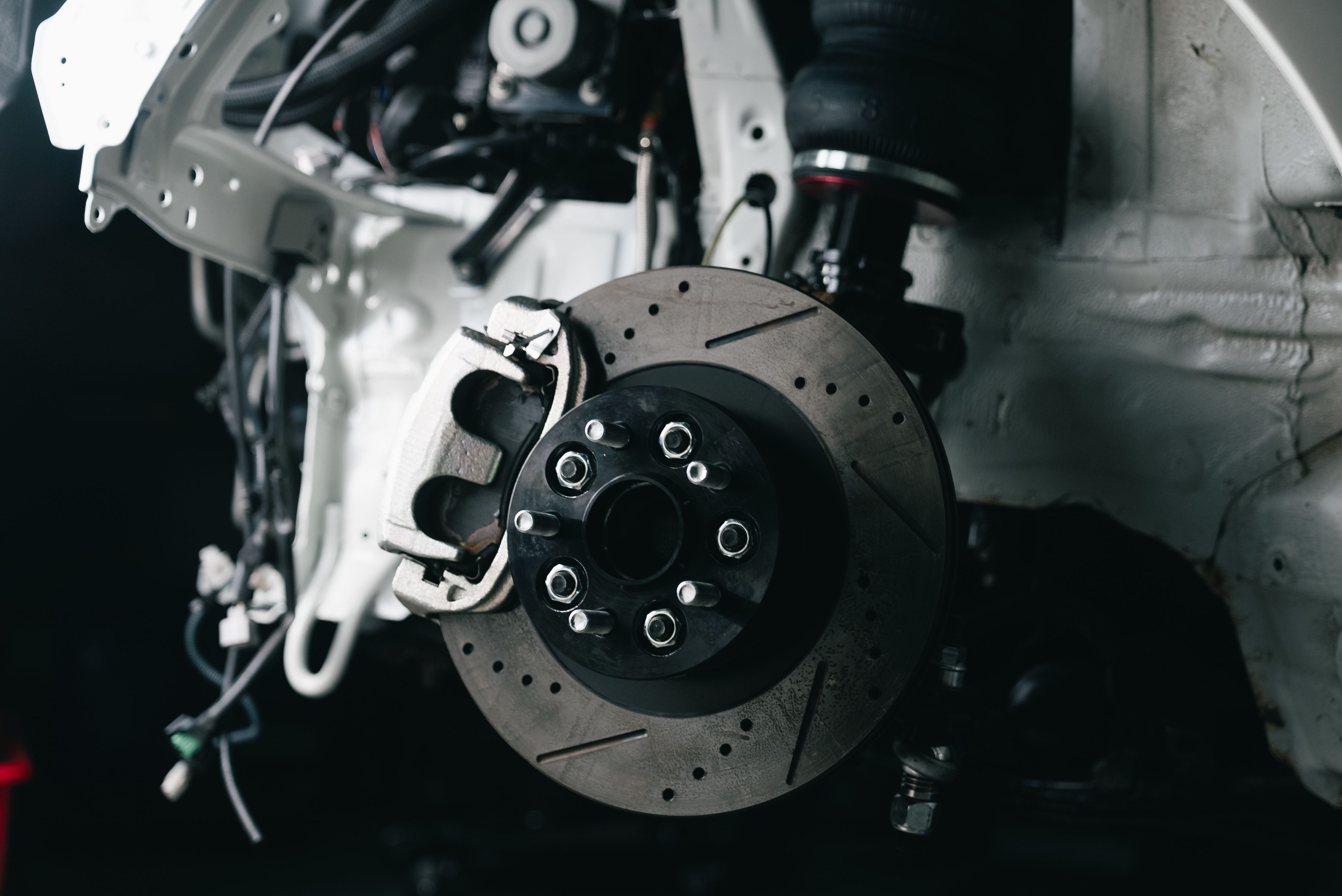
Brakes are the number-one out-of-service category and the one with the worst consequences. A 2006 Federal Motor Carrier Safety Administration study of the Large Truck Crash Causation Study found that nearly 55 percent of trucks in the study had at least one mechanical violation, and almost 30 percent had at least one out-of-service condition. Brake violations made up 36 percent of all mechanical findings. Most telling: a brake out-of-service condition increased the odds of the truck being the critical reason for the crash by about 1.8 times.
The failure modes are unglamorous. Slack adjusters drift out of adjustment as linings wear, air lines chafe and leak, chambers fail, and drum heat cooks what is left. A slow air leak or a soft pedal is not something to drive to the next exit on “to be safe” – a truck that cannot stop is not a truck that can limp.
Lights, electrical, and the no-start that isn’t exotic
Lighting is the most preventable category on the list and still sits at roughly 13 percent of vehicle out-of-service findings. A dead marker lamp or an inoperative trailer brake light is a two-minute yard fix that becomes a roadside violation purely because the walk-around was rushed. One technical point worth knowing: an inoperative required lamp is one of the most frequently cited violations in FMCSA’s national roadside data, so a $15 bulb is genuinely not worth the CSA hit.
The electrical system is the quiet one. Weak batteries, a failing alternator, and corroded terminals strand trucks with no warning at all – there is no grinding noise, no smell, just a click when you turn the key. That is why voltage and terminal condition belong in your pre-trip, not just in your memory.
Engine, cooling, and aftertreatment: the expensive downtime
Engine and cooling failures are lower-frequency but higher-consequence. An overheating event that gets ignored can take the whole engine with it, and a coolant hose or clamp failure is one of the most common “run to failure” problems on the road. The United States’ own compliance data backs up the cost: the average unscheduled mechanical roadside repair ran about $491 by the first quarter of 2020, a 30 percent jump in a single year, and that figure excludes tires and towing.
This is where the industry’s attention is often misallocated. Fleets spend real money on predictive telematics that flag a 2-to-3°F cooling drift, and that is fine – but the failure it prevents is still usually a $40 hose. My read is that the boring maintenance items (pressure, tread, lining wear, terminal corrosion, coolant level) prevent more roadside events than any dashboard algorithm, because they catch the failures telematics was never going to see coming.

How often should you expect a breakdown, anyway?
More often than most drivers assume. The American Transportation Research Institute’s 2024 operational cost report, summarized by Fleet Maintenance, put the average at 37,700 miles between breakdowns or unscheduled repairs across the fleets surveyed. Truckload carriers were worst at about 32,000 miles; less-than-truckload fleets stretched to 80,817. Bulk haulers on hard routes with older equipment can see far less than 10,000.
So a breakdown is not a freak event. It is a predictable cost of doing business, and the only real variable is whether you meet it on your schedule in the yard or theirs on the shoulder.
Repair it here, or call a tow?
This is the decision drivers get wrong most often, and the reflex to “get a tow” is frequently the expensive one. Mobile repair can handle a surprising amount on-site – a blown air line, a failed battery, a glad hand, a lighting fault, a minor coolant top-off, an electronic fault reset from a diagnostic tool. Those jobs are usually faster and cheaper done where the truck sits than after a tow to a shop that then has to schedule the work.
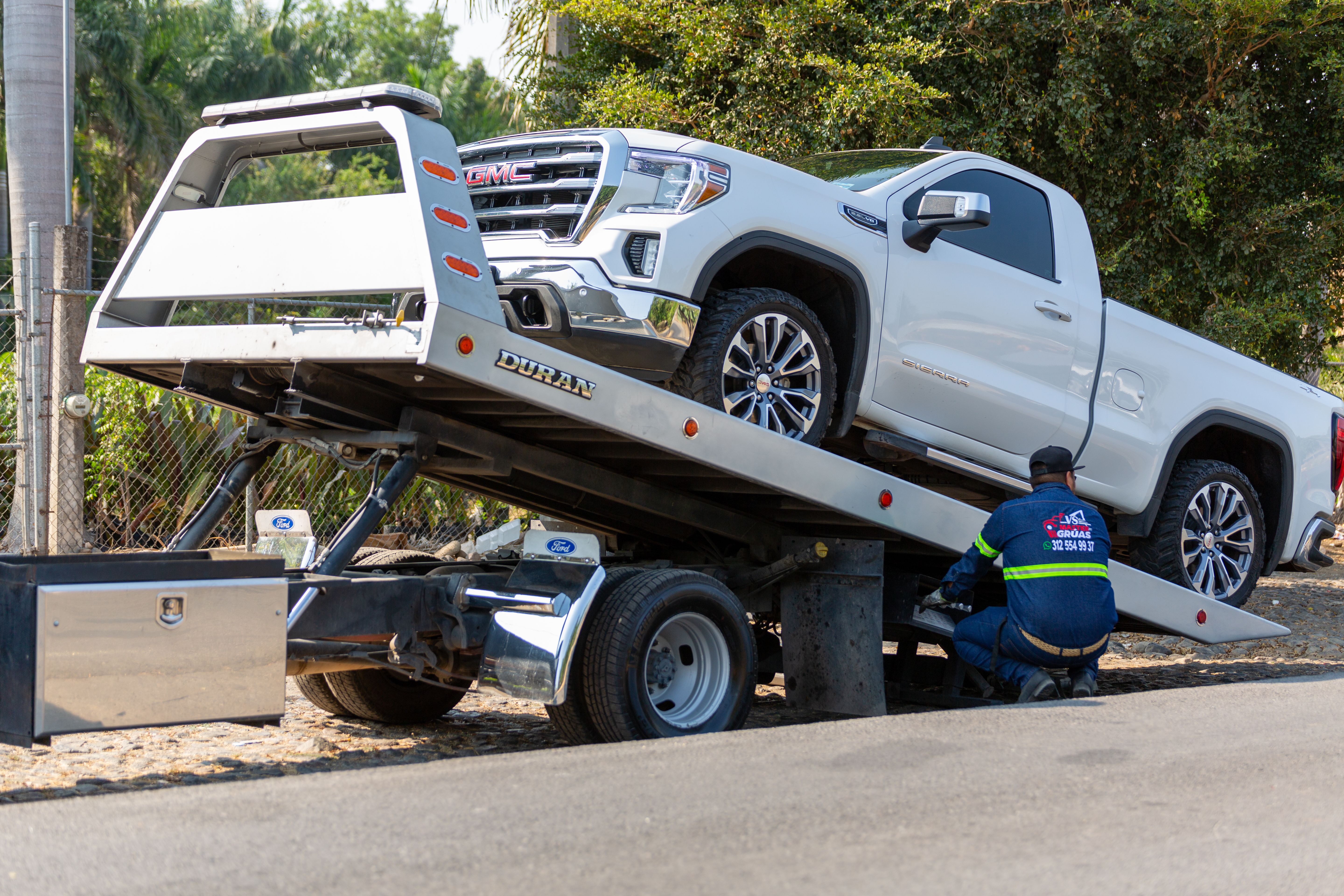
A tow is the right call when the truck genuinely cannot move or be made safe: a seized engine, a failed transmission, a wheel assembly wrecked by a blowout, or a brake system compromised enough that moving under its own power is unsafe. If you are uncertain which situation you are in, ask the provider to send a mobile tech to assess first – the assessment is cheap, and it stops you paying for a recovery you did not need. A service that handles both truck repair and roadside assistance under one roof removes the guesswork, because the same call can escalate from a roadside fix to a tow if the diagnosis warrants it.
While you wait, do three things: log the delay correctly in your ELD as on-duty, not-driving time; take timestamped photos of the scene and the fault; and keep every receipt. Those three habits are what turn a messy breakdown into a clean insurance claim or reimbursement instead of an argument.
Frequently asked questions
What is the most common cause of semi-truck breakdowns?
Tires, by a wide margin. The Technology & Maintenance Council attributes 53.5 percent of roadside breakdowns to tire failures – mostly underinflation and low tread. Brakes are the second most common cause and the most dangerous one.
How long do I have to place warning triangles after a breakdown?
Ten minutes. Under 49 CFR 392.22, warning devices must be placed within 10 minutes of stopping on the traveled portion or shoulder of a highway, with one device about 10 feet behind the truck on the traffic side and two more roughly 100 feet ahead and behind.
Can I repair my truck on the shoulder?
Only minor, genuinely safe work – swapping an air line or glad hand, topping off fluids, resetting a fault. Anything that puts you under the truck or next to live traffic is not worth it. On a narrow shoulder or a blind curve, request professional help and stay clear.
Do other drivers have to move over for a broken-down truck?
In 19 states and Washington, D.C., yes – their Move Over laws cover any vehicle with hazard lights flashing, including a disabled truck. In the rest, drivers must still move over for emergency and service vehicles with lights on. Either way, do not assume they will.
Should I call a tow truck or a mobile mechanic first?
Call a mobile mechanic first for anything that might be fixable on-site – tires, air leaks, batteries, lights, and minor faults. Reserve the tow for seized engines, failed transmissions, wrecked wheel assemblies, and brake failures that make the truck unsafe to move. If your provider offers both, they can decide on scene.
How much does a semi-truck breakdown cost?
The average unscheduled mechanical roadside repair ran about $491 as of early 2020, a 30 percent year-over-year jump at the time, and that figure excludes tires and towing. A single tire service call commonly runs $500 to $600 before the replacement tire, and the lost driving time usually costs more than the repair itself.
Leave a Reply